


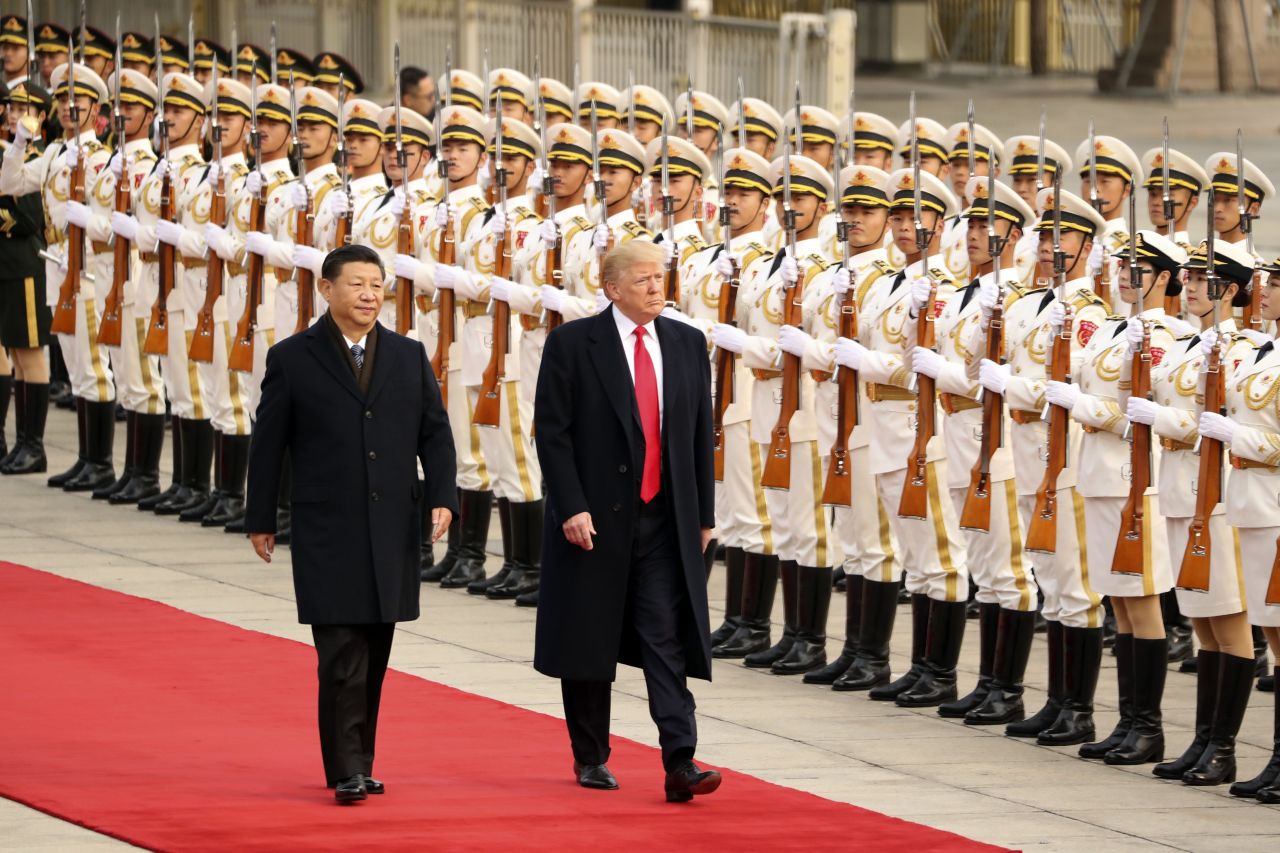
President Trump’s trip to China may have been to get China to agree to put pressure on the Iranians to open the Strait of Hormuz.” It is debatable whether that goal was achieved, says Special Projects Correspondent Jian Sun.
BEIJING — US President Donald Trump visited China to negotiate a fragile economic and strategic detente with Chinese President Xi Jinping in one of the most consequential geopolitical summits of the decade. The visit, which both leaders described as an attempt to control rising competition and avoid open conflict, took place in mid-May 2026 and highlighted a shifting global distribution of power.
The three-day trip to Beijing followed extensive preliminary talks on trade and global security in Seoul, South Korea. Amid a grinding war in Iran and persistent tensions over Taiwan, the summit yielded platitudes of “constructive strategic stability” with few major substantive breakthroughs.
Trump’s visit, his first to China in nearly nine years, was a landmark visit that showed profound shifts in Sino-American relations, and ushered in a new era of highly calculated engagement.
What Trump’s China visit means
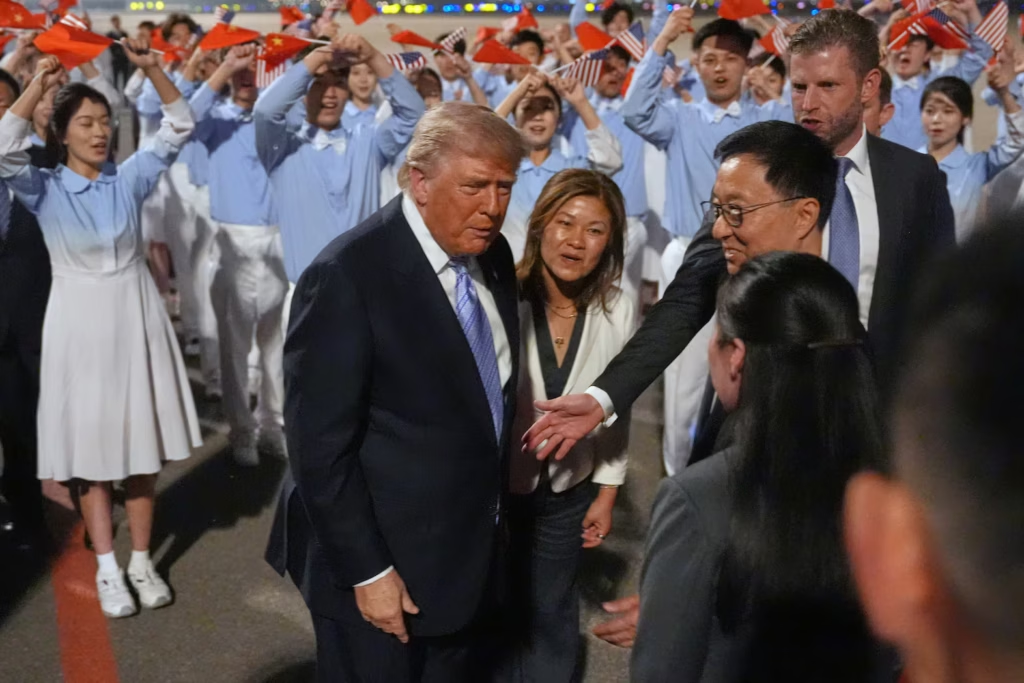
President Trump’s trip to China was spurred by the desperate need to find economic and geopolitical wins, driven largely by domestic pressure and global crises. For months, the main focus of the Trump administration had been the raging Iran war, badly disrupting global energy markets and choking off the Strait of Hormuz.
The economic fallout of this conflict, coupled with high energy prices and rising inflation, took a heavy toll on President Trump’s approval ratings back home. Trump arrived in Beijing with a delegation of leading US corporate executives, including Tesla’s Elon Musk, Apple’s Tim Cook and Nvidia’s Jensen Huang. The US administration was keen to prevent China from gaining economic leverage over global supply chains and wanted a stable trade truce to reassure domestic markets.
The visit was also meant to help ease tensions in the Taiwan Strait and to discuss China’s possible role in the resolution of the conflict in Iran.
What the Summit Achieved
The high-stakes summit concluded with ambiguity, as the US and China diverged on many of the specific terms laid out during the talks.
Economically, US officials trumpeted a few expected commercial agreements, such as Chinese buys of American oil and a $200 billion pledge by China to buy 200 Boeing aircraft. The leaders sought to prolong a fragile trade truce struck earlier under which Trump had agreed to hold off on threatened triple-digit tariffs on Chinese goods. But market analysts said many of the announced deals were not yet fully developed and were “left on the tree”. The Chinese have not said or announced that they agreed to any of these deals. The only certain thing to come out of Trump’s visit is that the Chinese president gave him a guided tour of Beijing, including the Temple of Heaven, the Great Hall of the People, and a number of palaces and parks.
On global security, the two leaders discussed the war in Iran, with Trump saying he and Xi agreed that Iran should not be allowed to have nuclear weapons. This was known already because Iran had a policy, a fatwa in fact, which banned the country from ever developing or acquiring nuclear weapons.
China has followed these diplomatic niceties but stood firm on core national interests. President Xi issued a stern warning that mishandling the Taiwan issue could lead to an ‘extremely dangerous situation’ after bilateral meetings, setting the stage for the talks with a backdrop of Chinese strategic assertiveness.
President Xi Absence from the Airport
When President Trump landed at Beijing Capital International Airport, the departure from normal diplomatic protocol was striking: Chinese President Xi Jinping was nowhere to be seen on the tarmac.
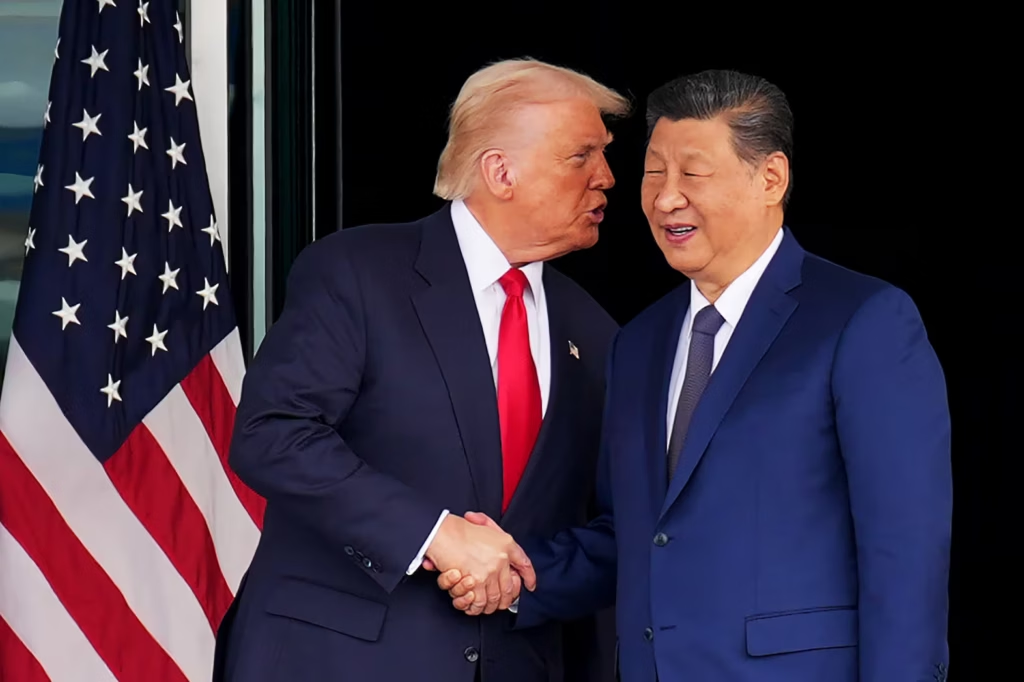
Instead, Trump was greeted by Vice President Han Zheng, a military honor guard and cheering children. Some political commentators saw Xi’s absence as a deliberate diplomatic slight, with a power shift in which Beijing was in the driver’s seat, but it was also a calculated domestic staging by China.
Xi’s refusal to personally greet Trump at the airport was a signal that China now sees the US as a peer rival rather than a privileged partner. It was a signal of a power shift in Beijing, ensuring that the American leader’s visit was seen by the Chinese public on China’s terms and keeping the focus on Chinese priorities.
The timing of the US presidential visit also coincided with a state visit by Tajikistan President Emomali Rahmon, a conscious element of Beijing’s diplomatic choreography.
Just days before Trump’s visit to Beijing, President Xi hosted Rahmon to sign a sweeping “Treaty on Permanent Good Neighborliness, Friendship and Cooperation.” This bilateral alignment with Central Asian countries is part of China’s larger strategic doctrine aimed at securing its western borders, expanding economic integration across the Eurasian continent, and establishing alternative supply and energy corridors.
Beijing sent a message of global strength, as the US president arrived, by emphasizing strong, pre-existing alliances with Central Asian neighbours. It sent a signal to Washington that China is the anchor of a vast, multipolar network of allies that stretches far beyond traditional Western spheres of influence.
The Future of the Sino-USA Relationship
Moving forward, the Sino-US relationship is expected to be defined by “managed competition” rather than full-blown cooperation or open warfare. Both superpowers are nuclear-armed heavyweights with deeply intertwined economies, making outright confrontation devastating for both sides.
The future of the relationship will likely oscillate between periods of intense economic rivalry and pragmatic truces. Tensions over advanced technologies, artificial intelligence, and strategic influence in the Indo-Pacific will continue to serve as major flashpoints. However, recognizing the global stakes, both nations appear committed to maintaining “strategic stability” to prevent their deep competition from spiraling into uncontrollable disaster.
Impact on Europe and Other Nations
Where the US-China relationship goes from here will have profound ripple effects for Europe and other countries. For European countries the detente between Washington and Beijing is a precarious tightrope. European countries depend on American security guarantees and on large Chinese manufacturing and consumer markets. The tense US-China trade war poses severe economic headwinds for Europe, where industries have to cope with disrupted supply chains and the threat of secondary tariffs. A US-China detente, by contrast, offers immediate economic relief but leaves Europe anxious that crucial global rules – such as the fate of Taiwan and the stability of global tech markets – are being negotiated bilaterally by two superpowers without sufficient European input.
The political-geographical calculus will be equally complex for developing countries across Africa, Latin America and Asia. Many of these countries are deeply integrated into China’s infrastructure and investment networks. Developing countries could find themselves under increasing pressure to pick between Western alliances and Beijing’s economic spheres as the US and China vie for influence. Moreover, the position of China and the United States on international conflicts, like the war in Iran and instability in the Asian region, influences the world oil prices and security realities, making smaller countries vulnerable to economic and strategic tremors from Washington and Beijing.
In short, the rest of the world must navigate an increasingly fractured global order shaped by transactional, major-power realignments as both superpowers set a new baseline for peer-to-peer competition.