


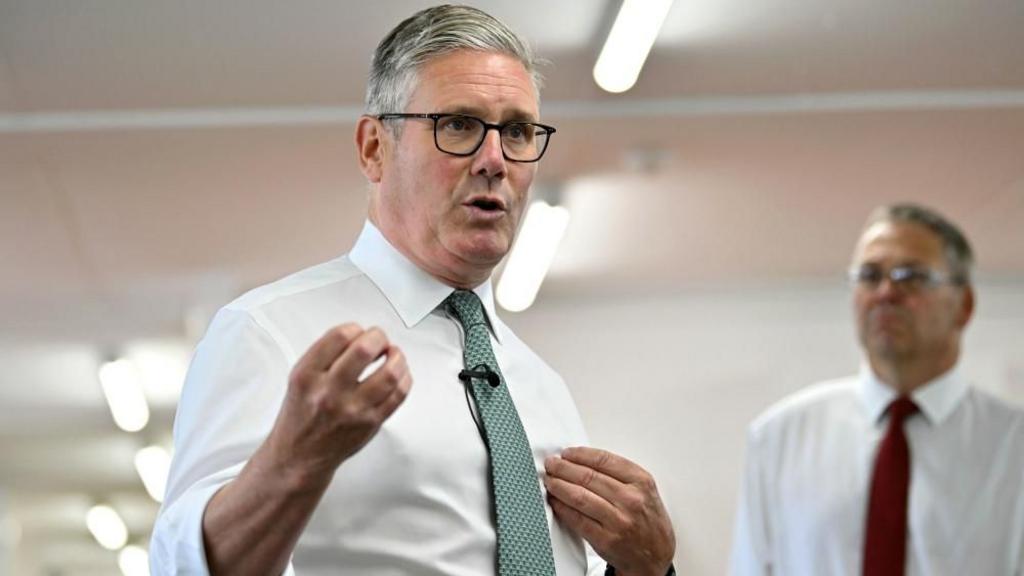
Just twenty-two months after he swept into Downing Street with a historic landslide, Keir Starmer is fighting for his political existence. The man once hailed as the cure for Britain’s post-Brexit chaos is now seen by his own MPs as the disease. Michael Mishun, UK Correspondent investigates.
LONDON — In the wake of the devastating local election results of May 2026—where Labour bled council seats to Nigel Farage’s Reform UK and lost control of traditional heartlands—the Labour Party is not merely fracturing; it is undergoing a nervous breakdown. With Starmer’s approval ratings in the abyss, a cabal of backbenchers circling, and the ghost of the Jeffrey Epstein scandal clinging to his judgment, the question gripping Westminster is no longer whether Starmer can win the next election. It is whether he will still be Prime Minister by Christmas.
The May 2026 Local Elections Massacre
To understand the panic currently consuming the Parliamentary Labour Party (PLP), one must look at the numbers from last Thursday’s local elections. They are not merely bad; they are apocalyptic for a ruling party.
Early results showed Labour losing over 26 seats in the first three councils to declare, with Reform UK gaining 34. In Halton, Cheshire—a constituency Labour has held for decades—Reform UK walked away with 15 councillors. In Hartlepool, Reform swept all 12 seats, obliterating Labour’s presence entirely. As the counting continued, the narrative solidified: the populist right, fueled by working-class disillusionment, is eating Labour’s lunch.
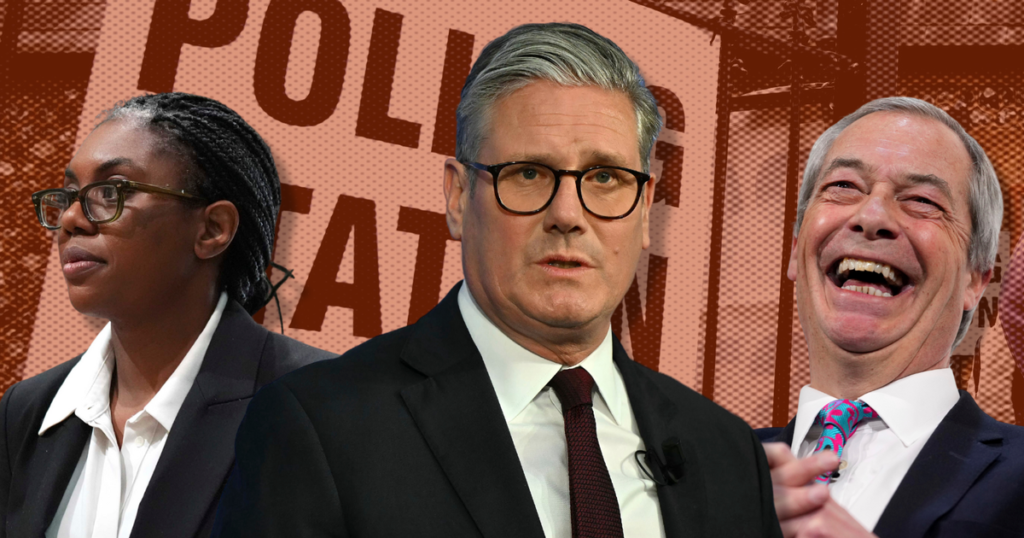
For Starmer, who won the 2024 general election largely because the Conservative Party imploded rather than because the public fell in love with him, this is a mortal wound. The pundits who warned that Starmer’s victory was “wide but shallow” have been proven tragically correct.

The economic context offers no lifeline. Instead of the “hope” Starmer promised, voters are experiencing a cost-of-living sequel. While inflation has eased from its peak, it remains stubbornly above the Bank of England’s 2 per cent target, currently sitting at 3.4 per cent. The drop is slower than expected because of a cruel irony: food prices are rising again. Staples like chocolate, sugar, jam, and meat have surged by 4.4 per cent. For families already stretched by high borrowing costs, the “Starmer economic reboot” feels like a fantasy.
The ‘Mandelson Mistake’ and the Epstein Stain
If the economy has undermined Starmer’s credibility, his handling of the US embassy has shattered the perception of his competence.
In a scandal that refuses to die, Starmer was forced to apologize earlier this year for appointing Peter Mandelson—the “Prince of Darkness” of New Labour—as Ambassador to Washington. The appointment imploded spectacularly when the Epstein files revealed the depth of Mandelson’s relationship with the convicted pedophile Jeffrey Epstein.
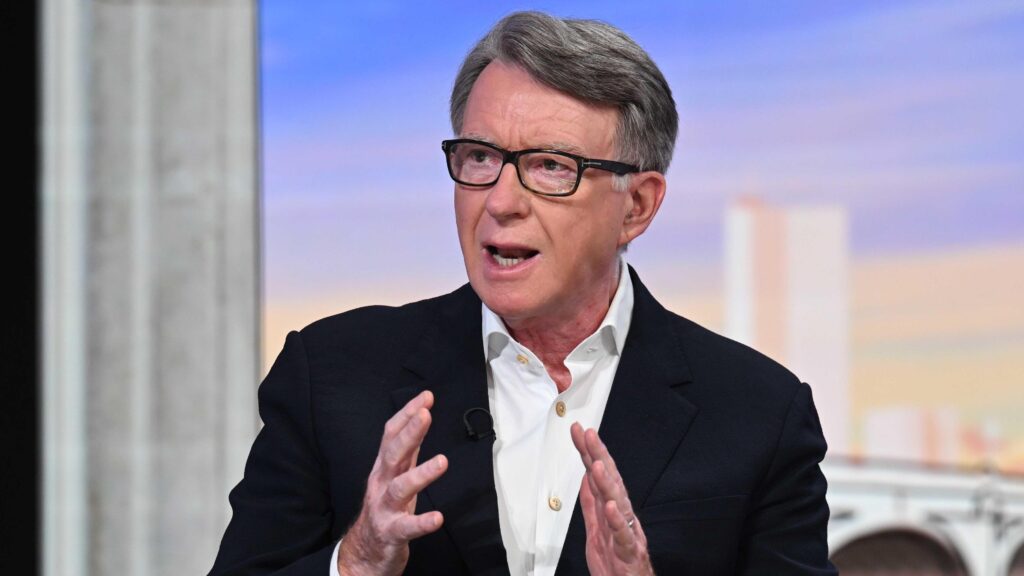
The disclosures show that Epstein made payments totaling approximately £55,000 to Mandelson or his partner between 2003 and 2004. More damagingly, emails suggest Mandelson shared sensitive UK government information with Epstein during the 2008 financial crisis.
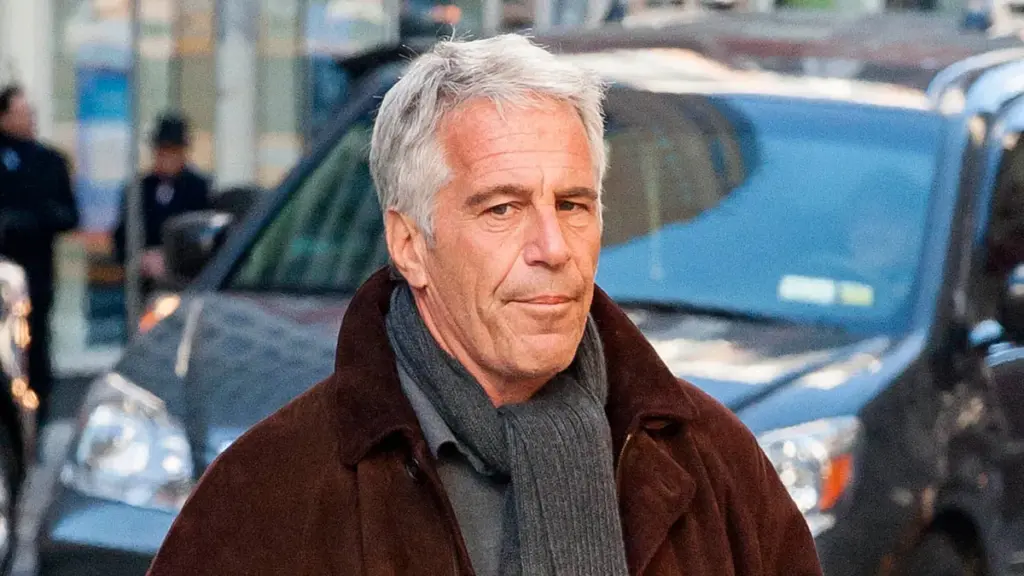
Starmer sacked Mandelson in September 2025, but the damage was done. In a humiliating episode this April, even Donald Trump—not a man known for moral high ground—weighed in. “Prime Minister Keir Starmer… acknowledged that he ‘exercised wrong judgement’… I agree, he was a really bad pick,” Trump wrote on Truth Social.
For Starmer, whose brand was supposedly “competence” after the chaos of Boris Johnson and Liz Truss, the Mandelson affair exposed a fatal indecisiveness. His former chief of staff, Morgan McSweeney, told a parliamentary committee that advising Starmer to pick Mandelson was “a serious mistake” and that discovering the Epstein link was “a knife through my soul”. Critics within Labour are asking a brutal question: if the former Director of Public Prosecutions couldn’t vet a man with known links to Epstein, how can he run the country?
Personality Cult of the Robot
Inside Westminster, the mood has shifted from disappointment to despair. Labour MPs are no longer whispering; they are shouting.
Backbencher Catherine West briefly attempted to trigger a leadership contest, telling the BBC that while Starmer is a “very nice man,” he is “an awful politician”. Paula Barker went further, arguing that “the country has stopped listening to Keir… it’s becoming increasingly clear that our Labour government can no longer succeed if we have Keir at the helm”.
The accusation is that Starmer lacks political astuteness. He has the qualifications—human rights lawyer, DPP—but he lacks the radar. The Guardian noted that his authority is now rooted only in “managing the party apparatus, not in competence, loyalty or personal appeal”. He is the robot prime minister, unable to offer a “destination” or a narrative that voters can grasp. This vacuum has created a desperate search for an alternative. The name on everyone’s lips is Andy Burnham, the Mayor of Greater Manchester.
The Burnham Shadow
Burnham is the man Labour loves but cannot have. While Starmer flounders, Burnham looks prime ministerial. He is a rare beast: a politician with genuine working-class authenticity who is also seen as competent.
Angela Rayner, the Deputy Prime Minister, has openly broken ranks, stating that Labour needs to bring its “best players into Parliament” and that blocking Burnham from standing for a seat was a “mistake”. Business Secretary Peter Kyle was forced into a defensive crouch, insisting that Burnham “made a series of commitments to Manchester and those commitments should be seen through”.
But the subtext is screaming. Burnham cannot challenge Starmer because he is not an MP. And Starmer—using his control over the party’s National Executive Committee—is determined to keep it that way. As The Guardian editorialized, Starmer’s strategy is one of “shameless” survival: cling to power long enough to block rivals like Burnham while daring the centrist Wes Streeting to try his luck.
Geopolitics on the Edge
It is against this backdrop of domestic chaos that global instability is rising. The King’s Speech, delivered on 13th May 2026, outlined a foreign policy agenda fraught with peril. The government is pursuing a tricky reset with the EU, involving dynamic alignment on food standards and carbon trading—a policy that enrages the Brexit wing of the electorate.
Simultaneously, the government is planning to proscribe the Iranian Revolutionary Guard Corps (IRGC) and is in limbo over the Diego Garcia base, waiting for the US to agree on terms with Mauritius. In a fractured world of high tariffs and the ongoing Ukraine conflict, Britain needs a leader with strategic clarity. Instead, it has a leader fighting for his job.
But is Keir the Man?
So, as we look toward 2027 and beyond, does Keir Starmer lead Britain, or is he merely occupying the space until someone better arrives?
The answer is nuanced but leans toward the exit door. Starmer’s primary skill was always subtraction—removing Jeremy Corbyn to make Labour electable. He never mastered addition: adding excitement, adding hope, or adding a reason to vote for him rather than against the Tories.
The problem for the Labour Party is the “someone better” problem. Is Andy Burnham a superior communicator? Yes. But can he win a general election from outside Parliament? No. Wes Streeting is ruthless, but perhaps too Blairite for a membership that still harbors leftist sympathies. Angela Rayner connects with the working class but is viewed as a liability by the financial markets.
Yet, the absence of a perfect candidate does not guarantee Starmer’s safety. In politics, parties often jump off the cliff because staying on the cliff with a wounded leader is worse.
If Starmer survives the summer, he will do so as a hostage prime minister, controlled by the very machine he once commanded. If he falls, he will be remembered as the man who won the lottery of 2024 and squandered every penny by 2026. The “chopping and changing” he warned about in January is no longer a threat—it is a promise.