


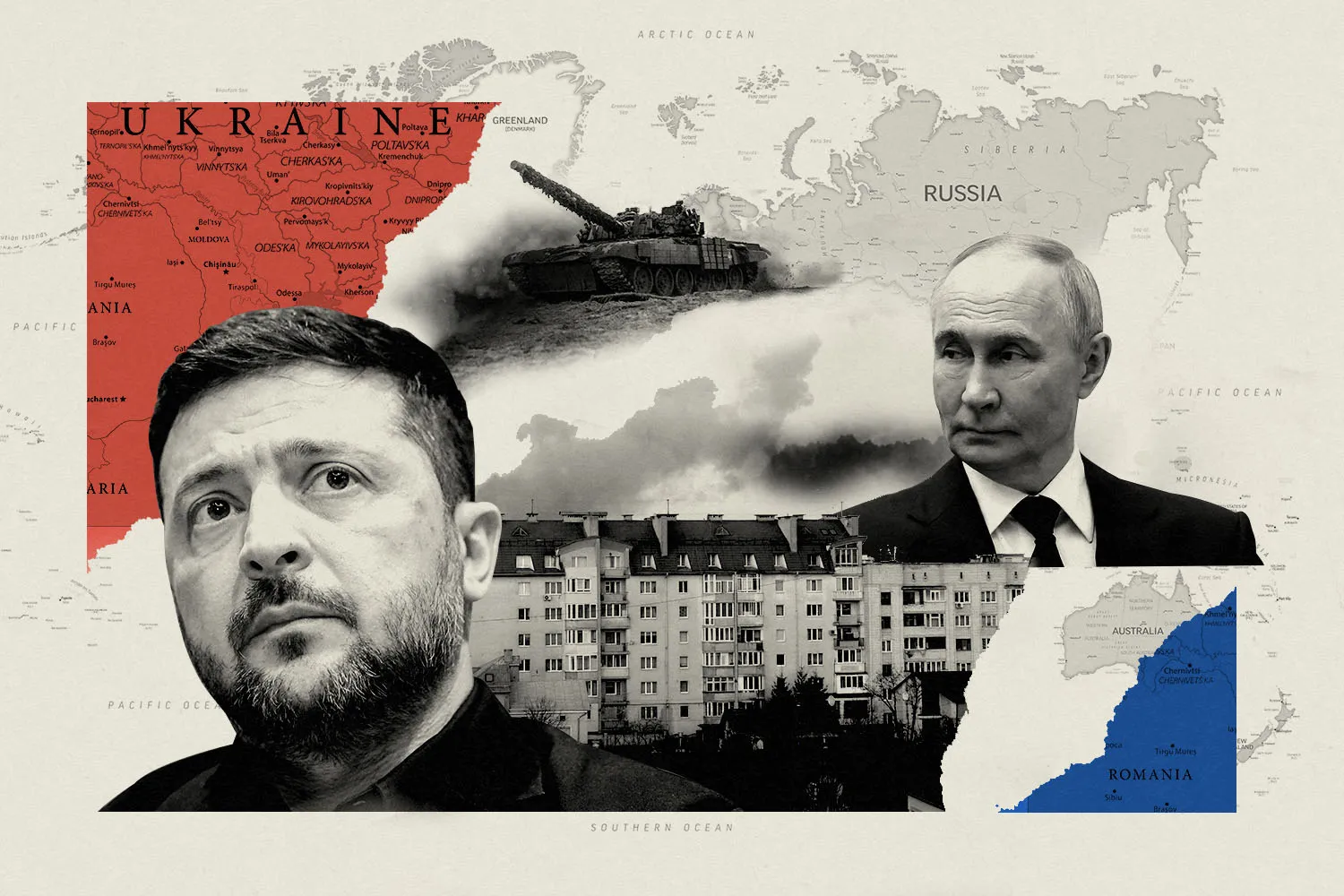
According to Nigel Simmonds, the EU correspondent for Times Publications, the Ukraine-Russia war is expected to conclude in a manner similar to most modern attrition wars: not with a sudden explosion, but rather with a weary and imperfect agreement. The price will be a frozen conflict, a divided nation, and a more confident Russia caused by Ukraine remaining outside both NATO and the EU.
By the shores of the Black Sea and the trenches of the Donbas, a terrible arithmetic is taking hold. After more than three years of the largest land war in Europe since 1945, the conflict between Ukraine and Russia is no longer a war of sweeping maneuvers or heroic counteroffensives. It has become a war of numbers: of shells, of soldiers, of dwindling treasuries, and of political wills stretched to breaking points.
The question that echoes from Kyiv to Washington, from Moscow to Brussels, is no longer “Who will win?” but “How will this end—and when?” Drawing on military realities, economic data, and diplomatic backchannels, a sobering picture emerges. The active, high-intensity phase of the war will likely cease between late 2025 and mid-2026, not with a surrender or a grand treaty, but through a phased, exhausted ceasefire. A formal peace framework will follow in early 2027. The outcome will be a frozen conflict: a divided Ukraine, a weakened Russia, and a peace that feels more like a truce.
The Battlefield Reality
To understand the endpoint, one must first walk the front line. As of spring 2026, the battlefield resembles the Western Front of 1916 more than the Blitzkrieg of 1941. After Ukraine’s 2022 counteroffensives and Russia’s strong defensive lines of 2023-24, both sides have yet to make the other capitulate.
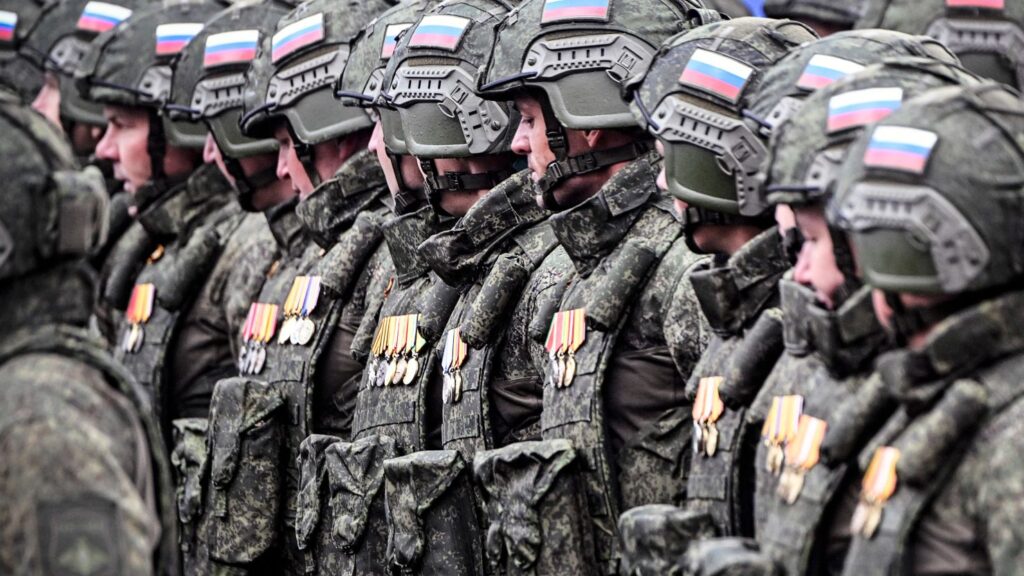
Russia’s statement that the conflict is a “special military operation” rings true because so far there have been no military strikes that would break Ukraine’s political and economic will. Life continues as normal in the capital cities. Ukraine, despite Western backing and military support, lacks the air power and artillery superiority to push back Russia. Instead, the front has settled into a grinding war of small villages changing hands at a cost of hundreds of lives per square kilometer. By late 2025, both armies will face critical personnel shortages. Russia has already tapped deeply into its Soviet-era reserves and regional volunteers, while Ukraine—with a smaller population and reliance on foreign aid—faces even steeper mobilization hurdles.
Military analysts agree that the final major offensives will occur in the winter of 2025-2026. Russia is expected to make a final push for the entire Donetsk Oblast, while Ukraine will attempt to advance towards Melitopol. When these fail to alter the frontline significantly, the generals on both sides are likely to deliver the same grim verdict to their capitals: victory by force is no longer possible.
The Economic Tipping Point
However, battlefields are not isolated environments. Wars end when money runs out or domestic patience expires. Both belligerents are facing a time constraint. Russia enters 2026 with a war economy running at nearly 5 to 8 per cent of GDP on military spending. Inflation hovers over 5 per cent. A labor shortage, caused by mobilization and emigration, is slowing civilian industries. The Kremlin can sustain this situation for another 18 to 24 months by further limiting consumption, investments inside Russia, and recourse to its sovereign wealth funds. Yet the tipping point for President Vladimir Putin will not be a budget crisis but more likely social unrest caused by war fatigue.
For Ukraine, the timeline is tighter. Western financial and military aid remains vital but is becoming erratic. The US Congress, divided after the 2024 elections, continues to approve packages—but they are smaller and slower. The European Union will have provided over €130 billion (US$151 billion) in combined support by 2026, but domestic politics in Germany, France, and Poland are increasingly war-weary. Ukraine’s own economy is a patient on life support, caused by an exodus of its youngest and most vibrant citizens. External grants now entirely prop up Ukraine’s economy. A six-month interruption would trigger collapse.
The most likely pressure point is the winter of 2025 – 2026. As Russian missile campaigns again target Ukraine’s energy grid, and as Western ammunition deliveries slow, President Volodymyr Zelenskyy will face a war-weary population and potential electoral pressures. His judgment will be grim but pragmatic: continuing alone is impossible.
The Diplomatic Pathway
The war will not end with a dramatic summit in Minsk or Geneva. Instead, a gradual de-escalation will begin with informal backchannels established in early 2026. China and Turkey will re-emerge as primary mediators, with India and Brazil amplifying calls for a ceasefire. A joint Saudi-Chinese-hosted meeting in Riyadh in spring 2026 will produce the first concrete modalities: a mutual halt to long-range strikes and the creation of a demilitarized buffer zone along the current front.
The actual negotiations will be brutal. Russia will demand recognition of Crimea and the four annexed regions—Donetsk, Luhansk, Zaporizhzhia, and Kherson—as Russian territory. Ukraine will refuse legal cession but will accept a de facto freeze. The final compromise, barring a miracle, will look like this:
A ceasefire line that largely follows the front of mid-2026, with Russia controlling roughly 20 per cent of Ukraine—all of Crimea and Donbas, the four regions, plus the land bridge to Crimea. Ukraine retains access to the annexed territories and agrees not to pursue military recovery for at least 15 years. The toughest issue to resolve will be the security guarantees. Ukraine will not join NATO and the European Union. Instead, a coalition of guarantors—the United Kingdom, India, Brazil, Poland, Turkey, and South Africa—will pledge direct intervention if either nation launches a new offensive. It is less than Article 5, but enough for both nations to claim victory.
A Three-Phase Timeline
Phase 1 – Combat Pause (Mid 2026): By January through March 2026, battlefield offensives will likely have exhausted both sides. Casualty rates will spike due to winter operations, and Ukraine will have expended its last Western-supplied armored reserves. A mutual, tacit freeze—no major operations—will set in. Backchannel talks will intensify in Switzerland and Turkey.
Phase 2 – Ceasefire Agreement (Mid-2026): Between April and August 2026, a formal ceasefire will be announced. It will include prisoner exchanges (thousands still held), withdrawal of heavy weapons from a buffer zone, and a mechanism for humanitarian corridors. This is not peace, but the active war will end. Headlines will shift from front-line reports to negotiation analysis.
Phase 3 – Formal Framework (Early 2027): Within six to twelve months of the ceasefire, a broader framework treaty will be signed—likely in Istanbul or Beijing. This document will address Ukraine’s non-NATO security guarantees, a limited Russian withdrawal from the Kharkiv border area, reconstruction reparations funded by frozen Russian assets, and a long-term transit deal for Russian gas through Ukraine to Hungary and Slovakia. Ukraine will accelerate its EU accession path but not join for another two decades.
Thus, the high-intensity warfare will end in 2026, with a complete cessation of major combat operations. A permanent peace treaty will follow in the first half of 2027.
The Wild Cards and the Verdict
No forecast is foolproof. Two scenarios could accelerate or delay this timeline. An earlier end is unlikely; both sides still believe they can gain territory. A longer war, dragging into 2028, is possible if the West dramatically increases aid (for example, F-16s and long-range missiles in sufficient quantity) or if Russia collapses into internal unrest. But neither scenario is probable. The real wild card is a major political change in Moscow or Washington—yet Putin remains firmly in control, and US military engagements in the Middle East and policy has settled into a bipartisan equilibrium of “support Ukraine to weaken Russia but not enough to win outright.”
In conclusion, the Ukraine-Russia war will end as most modern attrition wars do: not with a bang, but with a weary, flawed bargain. The price will be a frozen conflict, a divided nation, and a more confident Russia caused by Ukraine remaining outside both NATO and the EU. The timing—mid-2026 for the active shooting, early 2027 for the paperwork—reflects the grim arithmetic of soldiers, shells, and sinking political will. The real victory will belong to neither flag but to exhaustion itself. And for the citizens of Ukraine, those at home and in the Diaspora, that may be the most tragic outcome of all.