


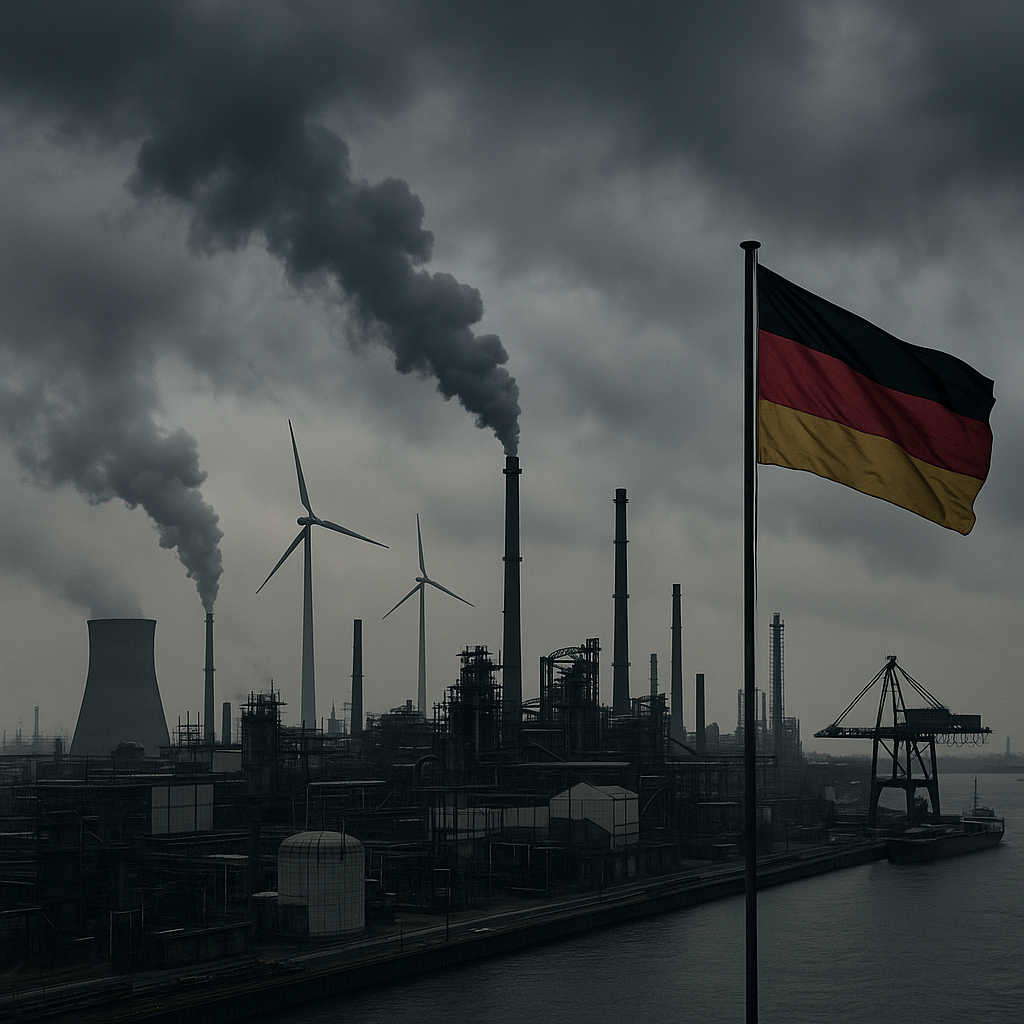
The European Union is currently facing a significant economic challenge. The initial unity of 2022, forged in the fire of sanctions and solidarity, has given way to a colder, more complex reality. By J.S. Buckley, European Economics Correspondent
In 2026, the bloc is facing what analysts at the International Monetary Fund (IMF) call a “familiar crossroads”: an energy shock pushing inflation higher, an industrial heartland struggling with terminal decline, and a geopolitical landscape where allies are as unpredictable as adversaries.
The departure of the United Kingdom, the destruction of the Nord Stream pipelines, and the severing of ties with Russian fossil fuels have not led to the immediate collapse predicted by some skeptics. Instead, the EU has entered a phase of expensive survival.
“The era of cheap energy is over,” one senior European diplomat told me on condition of anonymity, gesturing at the soaring debt yields in Southern Europe. “We survived the winter. Now, we have to survive the decade.”
Energy challenges
The blow to the Nord Stream pipelines in September 2022 was more than an act of sabotage; it was a severing of Germany’s economic jugular. Long reliant on cheap Russian methane, the German industrial model was shattered when the gas stopped flowing. Today, the EU has compensated for the loss of Russian pipeline gas with a massive pivot to Liquefied Natural Gas (LNG). However, the geography of this new supply chain has created a new dependency.
According to the Institute for Energy Economics and Financial Analysis (IEEFA), the United States will supply nearly two-thirds of Europe’s LNG imports in 2026. While this has kept the lights on, it has come at a staggering cost. From early 2022 to mid-2025, EU countries spent an estimated €117 billion on (US$136 billion) US LNG alone.
Yet, even this transatlantic lifeline is fraying. “Europe’s shift from pipeline gas to LNG was meant to provide security of supply and diversification,” argues Ana Maria Jaller-Makarewicz, lead energy analyst at IEEFA. “Yet, an overreliance on US LNG shows that Europe’s plan has failed on both counts. LNG has become the Achilles’ heel of Europe’s energy security strategy.”
The numbers support the grim assessment. Despite a broader decline in gas consumption, import dependency remains dangerous. Furthermore, while the EU vows to ditch Russian gas by 2027, data reveals a hypocritical reality: imports of Russian LNG actually increased by 16 per cent year-on-year in the first quarter of 2026, driven by deliveries to France, Spain, and Belgium. Moscow, through intermediaries and LNG tankers, still holds a piece of the European market.
Russia’s special envoy for economic cooperation, Kirill Dmitriev, has capitalized on this tension, warning that the EU faces an energy price “nightmare” due to its rejection of “stable and cheap” energy from the East.
The German Industrial Collapse
Nowhere is the pain felt more acutely than in the Rhine-Ruhr Valley. The “Made in Germany” label, once a byword for industrial might, is under threat.
Data released by Destatis, the Federal Statistical Office, paints a picture of a slow-motion collapse. Between February 2022 and March 2026, production in Germany’s most energy-intensive sectors—chemicals, glass, and metal processing—fell by a catastrophic 15.2 per cent. Over 53,000 industrial jobs have evaporated in those sectors alone.
[INSERT IMAGE HERE: German Chancellor mourns the country’s faltering economy.avif]
“What you are seeing is not a cycle; it is a structural break,” a German economics ministry official told me. The so-called “triangular balance” that sustained Germany for three decades—security from the US, exports to China, and cheap energy from Russia—has crumbled.
The situation has deteriorated further due to the recent conflict in the Middle East, which has sent oil prices soaring past $110 a barrel and disrupted shipping routes. The German government now expects growth to stagnate at a paltry 0.4 per cent in 2026, having slashed earlier forecasts.
To counter this, Berlin is abandoning its orthodox fiscal conservatism. A historic €500 billion (US$581 billion) “special fund” for defense and infrastructure has been approved. But economists warn this is a tourniquet, not a cure. The IMF notes that industrial energy prices in the EU are now roughly double their pre-2022 levels and substantially higher than those in the US, a “chronic disadvantage” that threatens to permanently hollow out the continent’s manufacturing base.
In the Shadow of Brexit
While the continent burns through cash for energy, the United Kingdom is watching from across the Channel—no longer a member nor an enemy.
In 2026, the Brexit story has pivoted from acrimony to pragmatism. The UK-EU Trade and Cooperation Agreement (TCA) is up for its five-year review, and London is signaling a desperate desire to lower barriers.
British Chancellor Rachel Reeves recently outlined a plan to align UK regulations with EU standards on chemicals and food, accepting Brussels’ rules in exchange for lower trade frictions. For the EU, this is a vindication of their “Fortress” strategy—the notion that leaving the single market hurts the leaver more than the bloc does.
Yet, the EU is missing the UK’s fiscal firepower. While the IMF notes that high-debt countries like France and Italy must tighten their belts, the UK, despite its own vulnerabilities, retains flexibility. The relationship in 2026 is one of cold peace: the EU has survived Brexit, but it has not thrived without it. The departure removed a major voice for deregulation, leaving the bloc increasingly reliant on state-led, protectionist industrial policy.
The IMF’s Warning on Fiscal Policy
As the EU grapples with these concurrent crises, international financial institutions are raising concerns about the response. The temptation, as seen in France and Germany during the 2022 crisis, is to deploy “energy shields”—price caps and fuel tax cuts.
But the IMF is imploring Europe to resist. In a scathing analysis published in April, the fund argued that during the 2022 crisis, European governments spent an average of 2.5 per cent of GDP on energy support, with two-thirds of that money going to wealthier households.
“Untargeted support disproportionately benefits higher-income households,” the IMF report states, urging countries to provide targeted aid only to the bottom 40 per cent of earners. More critically, the IMF warns that suppressing the price signal discourages the very efficiency measures and renewable investments that Europe needs to escape the trap permanently.
“In a world where shocks are becoming more frequent and overlapping—geopolitical disruptions, climate events, financial volatility—the capacity to respond is itself a strategic asset,” the IMF concluded.
The Future of the EU
What, then, is the future of the European Union? The short-term outlook is uncertain. The European Central Bank is trapped. It must fight inflation—which the IMF warns could approach 5 per cent in a severe scenario—without triggering a sovereign debt crisis in highly indebted nations like Italy. S&P Global notes that while Germany is spending big, France, the UK, and Italy are tightening, creating an uneven recovery landscape.
However, green technology is rewriting the long-term future. The positive news, according to the IMF, is that over 50 per cent of the EU’s electricity generation now comes from low-carbon sources—wind, solar, and nuclear. This reduces exposure to the whims of the oil price.
The EU is also aggressively pivoting geopolitically. The bloc is attempting to secure a defense framework and trade deal with India while negotiating with Indonesia and other ASEAN nations to reduce reliance on both the US and China. This strategy, known as “de-risking,” is a gradual process.
Furthermore, the EU is wrestling with internal bureaucracy. As a report from the Chinese Academy of Social Sciences noted wryly—and critically—German politicians are now openly lamenting that they “cannot build a railway in 20 years” due to bureaucracy. To survive, Europe must reduce bureaucratic obstacles in the AI and digital sectors while enforcing standards on carbon-intensive imports.
In conclusion, the EU in 2026 is not the failing state some predicted. It is resilient but exhausted. It has swapped dependency on Russian gas for dependency on US LNG at a crippling cost. It has watched its industrial engine stall in Germany. It has lost the UK as a fiscal partner.
The era of the “European miracle”—of peace funded by cheap calories and gas—is over. The future depends on whether the bloc can fully commit to the “Age of Agility,” accelerating the green transition and reforming its sclerotic bureaucracy before the next shock hits. If it cannot, the “nightmare” Russia predicts may not be one of freezing cold but of slow, expensive strangulation.