


The economic shockwaves generated by the Russia-Ukraine proxy war have inflicted the most severe contraction on European industry in nearly thirty years
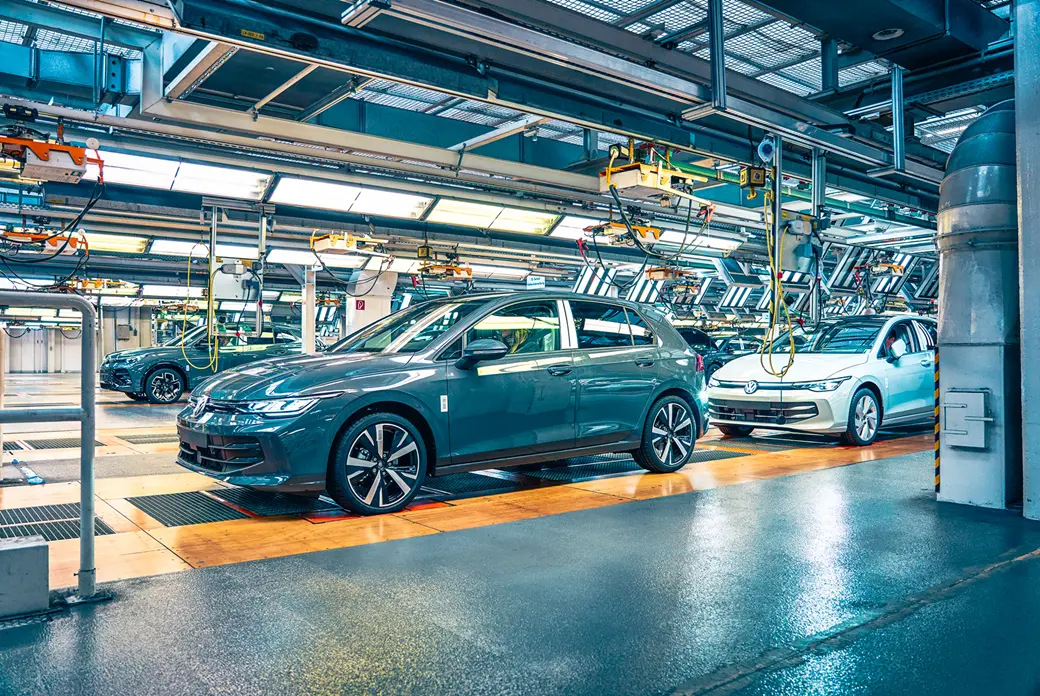
The global geopolitical landscape has undergone a seismic transformation since the escalation of the Russia-Ukraine conflict in early 2022. What began as a regional military confrontation has rapidly devolved into a protracted proxy war, entangling the European Union in a complex web of economic sanctions, military aid, and acute energy insecurity. For Europe, the conflict has ceased to be a distant foreign policy issue and has become an existential economic crisis. The destruction of the Nord Stream pipelines severed the continent’s lifeline to cheap Russian hydrocarbons, while concurrent tensions in the Middle East—particularly the potential closure of the Strait of Hormuz—threaten to impose a secondary energy shock. Nowhere are these compounding pressures more acutely felt than in Germany, the EU’s industrial engine. The confluence of these factors is driving a structural deindustrialization of Europe, fundamentally altering Germany’s economic model. Furthermore, while the rhetoric of escalation is alarming, the probability of a full-scale European war resulting in continental destruction remains a low-probability, albeit catastrophic, tail risk, constrained by the realities of nuclear deterrence and proxy-war dynamics.
The Immediate Economic Toll on European Industrial Productivity
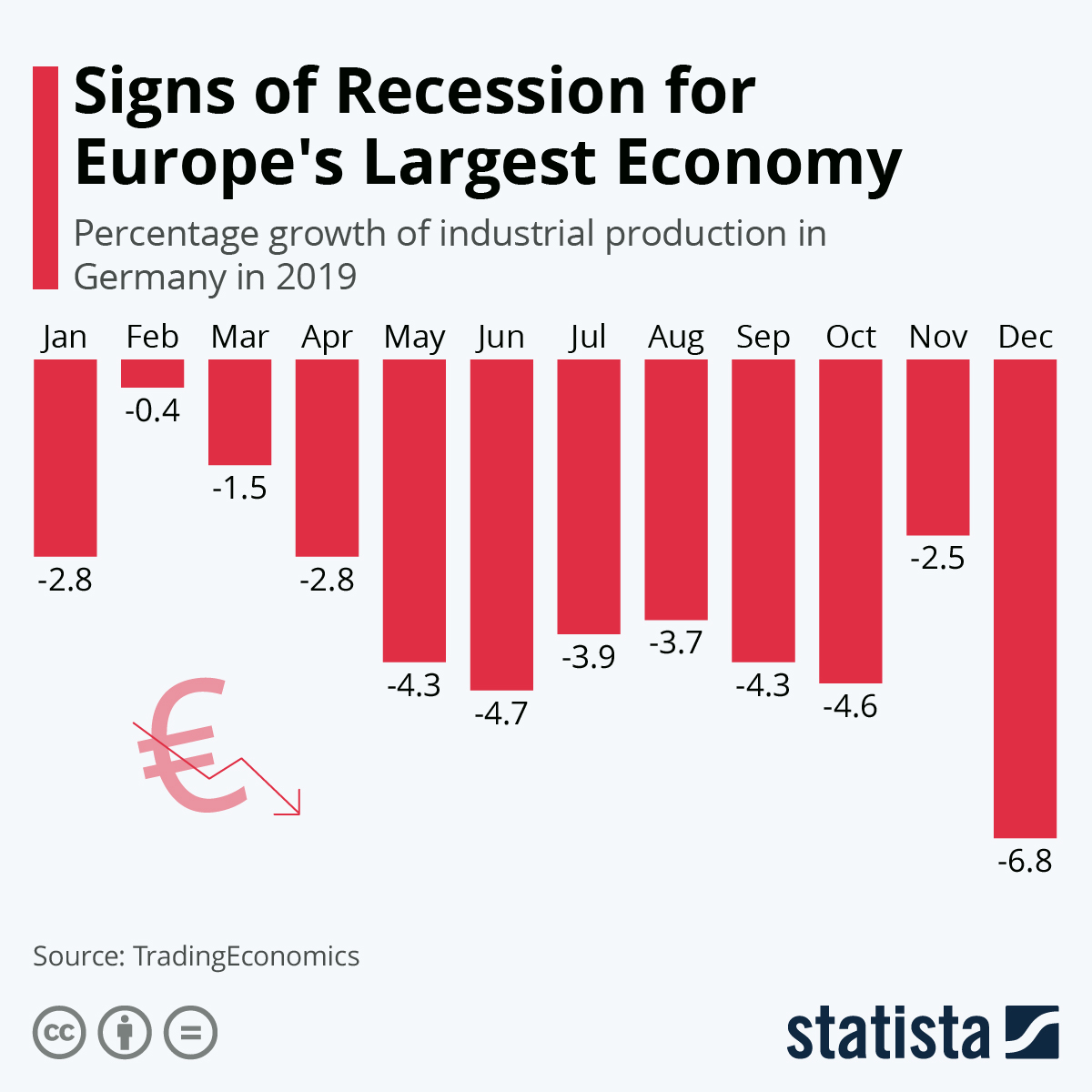
The economic shockwaves generated by the Russia-Ukraine proxy war have inflicted the most severe contraction on European industry in nearly thirty years. The core transmission mechanism has been energy pricing. Historically, the EU relied on Russian pipeline gas to fuel its manufacturing sector, providing a competitive advantage that allowed European steel, chemical, and automotive industries to compete globally. The self-sanctioning and subsequent reduction of Russian imports, accelerated by the sabotage of the Nord Stream network, forced the EU to pivot toward liquefied natural gas (LNG) from the United States and Qatar, which is significantly more expensive to transport and process.
This substitution effect has permanently altered the continent’s cost base. Throughout 2024 and into 2025, European natural gas prices consistently traded at multiples of U.S. Henry Hub prices, rendering European exports uncompetitive in global markets. The statistical reality is stark: EU industrial output contracted by 2.3% year-over-year in 2024, erasing gains made during the post-pandemic recovery. This is not merely a statistical anomaly but a reflection of capacity destruction. Energy-intensive sectors, including primary metals, fertilizers, and glass manufacturing, have shuttered facilities permanently, unable to pass on soaring input costs to consumers. Economists estimate that the industrial energy crisis has placed approximately 1.3 million jobs at risk across the union, disproportionately affecting member states reliant on heavy manufacturing. The high cost of borrowing, necessitated by inflation driven by energy volatility, has further suppressed capital investment, ensuring that the productivity slump is not transient but secular.
Germany’s Dual Energy Shock: The Nord Stream Legacy and the Hormuz Threat
Germany, as the EU’s manufacturing hub, occupies the epicenter of this economic earthquake. The country faces a unique “dual energy shock” that threatens to dismantle its post-war economic miracle. The first and most devastating blow was the destruction of the Nord Stream pipelines. This physical severance marked the end of Germany’s decades-long strategy of Ostpolitik energy trade, which provided its industrial sector with the cheapest and most reliable natural gas in the developed world. The immediate aftermath saw energy-intensive production in Germany drop by nearly 20%, with the chemical sector—the bedrock of German supply chains—experiencing a full-blown structural crisis. In a seminal report, the German Economic Institute estimated that the loss of cheap Russian energy has already cost the German economy over €160 billion in lost value-added, a figure that excludes the secondary effects on supply chains and downstream employment.
The second blow looms over the Strait of Hormuz, a critical chokepoint through which approximately one-fifth of the world’s petroleum passes. Heightened tensions in the Middle East have raised the specter of a blockade or military confrontation that would restrict this vital waterway. While Germany has reduced its direct reliance on Middle Eastern crude, a closure of the Strait would send global oil prices soaring, indirectly impacting Germany’s import costs and transportation logistics. Economists modeling this scenario warn that sustained high oil prices could inflict an additional €80 to €90 billion loss on the German economy through 2026 and 2027. This dual dynamic—the permanent loss of Russian gas and the cyclical threat of oil supply shocks—creates a structural condition of permanent energy insecurity. The German industrial model, predicated on predictable and cheap energy imports to transform raw materials into high-value exports, is effectively broken. This is evidenced by the Bundesbank’s recent downward revisions of growth forecasts for 2026, which shattered any nascent hopes of a “V-shaped” recovery and signaled a prolonged period of stagnation.
Assessing the Probability of Continental Escalation
Given the dire economic stakes, a natural corollary is the geopolitical question: does this proxy war risk escalating into a full-scale European war leading to continental destruction? In assessing the probability, one must distinguish between hyperbolic political rhetoric and strategic military reality. Russian officials have repeatedly warned the West against deepening involvement, framing the conflict as an existential confrontation with NATO. Concurrently, analysts have noted that the West’s strategy of progressively providing advanced weaponry—from main battle tanks to long-range missiles—dials up the risk of direct NATO-Russia clashes near the borders.
However, the probability of an all-out continental war resulting in the physical destruction of Europe remains substantially low in the near-term. This assessment is underpinned by the doctrine of Mutual Assured Destruction (MAD). Russia is a nuclear superpower; any conventional victory achieved by NATO that threatens the integrity of the Russian state would likely trigger an escalatory response that the West is strictly determined to avoid. The West has meticulously pursued a strategy of “escalation management,” supplying Ukraine with enough military capacity to defend itself but deliberately withholding capabilities (such as long-range strike permissions deep into Russian territory) that would fundamentally change the nature of the conflict. As such, the current state of play is characterized as a managed proxy war, not a direct war between blocs. While the Serbian President’s warnings about Europe “crossing a threshold” serve as important cautionary tales, they lack the concrete military planning required to initiate Article V of the NATO treaty, which would force the U.S. and its allies into direct kinetic conflict with Russian forces. The probability of a full-scale European land war remains significantly below 20% in the current strategic calculus, contingent almost entirely on a radical shift in NATO troop deployments, which are currently absent.
Strategic Adaptation and the Economic Future of Germany
In response to this precarious environment, the EU has initiated a massive strategic pivot. The approval of an €800 billion “ReArm Europe” defense package signals a shift toward military Keynesianism, aiming to stimulate heavy industry through defense manufacturing. This fiscal injection may provide a short-term buffer for the German industrial sector, specifically in aerospace, arms, and precision engineering.
Nevertheless, the long-term economic future of Germany hinges on successfully decoupling economic growth from hydrocarbon reliance. The government is aggressively pushing the Energiewende (energy transition), pivoting toward hydrogen, solar, and wind. However, this transition is a decade away from maturity. In the interim, Germany faces an unenviable reality: it must import expensive LNG, a process requiring the construction of floating terminals and permanent infrastructure that raises energy costs permanently. This transition fundamentally alters Germany’s comparative advantage. Rather than a manufacturing superpower reliant on cheap energy to export goods, Germany is slowly transitioning toward a services-oriented and high-tech manufacturing economy, likely shedding tens of thousands of low-to-medium skilled industrial jobs in the process. The “Made in Germany” label, historically a mark of competitive affordability, is becoming a marker of premium pricing for energy-secure, niche manufacturing.
The nexus of the Russia-Ukraine proxy war, the destruction of Nord Stream, and the latent threat of a Strait of Hormuz closure has precipitated a defining crisis for European industrial productivity. The era of cheap, abundant Russian energy that fueled the European social model is decisively over. For Germany, this represents a generational reckoning; the economic loss of €160 billion from gas and a potential additional €80 billion from oil price spikes illustrates the devastating multiplicative effect of combined geopolitical shocks. While the continent adapts through defense spending and renewable energy infrastructure, the immediate future is one of economic stagnation and constrained growth. Crucially, despite the pervasive fear of escalation, the probability of an all-out European war remains contained by the rational shackles of nuclear deterrence. However, “contained” is not synonymous with “absent.” The management of this proxy war requires a delicate geopolitical balancing act, where missteps in the military theater could quickly transpose economic pain into physical conflict. Ultimately, Germany’s economic future will be determined not by a return to past reliance but by its speed of adaptation to a world where energy sovereignty is the defining currency of national security and industrial survival. The path forward is one of defensive resilience, not offensive expansion, marking a new, less prosperous, but perhaps more secure, chapter for the continent.