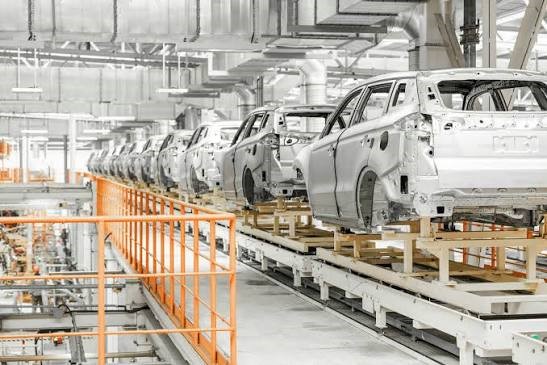


European auto plants now sputter at barely fifty-five percent capacity, a staggering fall from grace for an industry that once dictated global standards
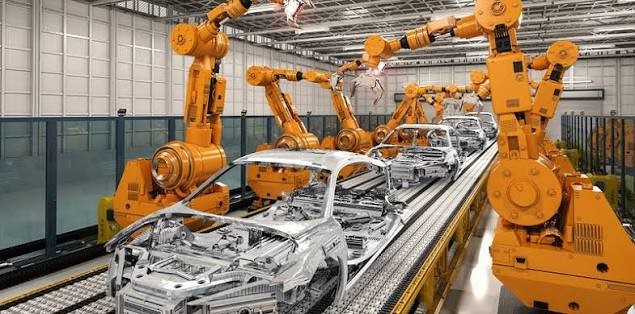
To walk through the sprawling industrial cathedrals of Wolfsburg or Turin today is to witness the twilight of an era. The mechanical roar that once defined European prosperity has softened to a mechanical whisper, drowned out by the hum of Chinese megafactories and the relentless arithmetic of soaring energy bills. Yet, to pronounce the continent’s manufacturing base dead is to mistake a painful metamorphosis for an outright extinction. Europe is not vanishing from the industrial map; it is shrinking, pivoting, and reinventing itself into something leaner, more exclusive, and far more fragile.
The statistics are brutal, but they tell an honest story. European auto plants now sputter at barely fifty-five percent capacity, a staggering fall from grace for an industry that once dictated global standards. Annual production has cratered from sixteen million vehicles in 2018 to just over eleven million today. The human toll is written in the tens of thousands of lost livelihoods—fifty-four thousand jobs in the parts sector vanished in a single year, and Volkswagen, the continent’s industrial titan, has marked over twenty-eight thousand German workers for elimination by the end of the decade. Financially, the margins have turned anemic; Volkswagen’s operating profit collapsed by fifty-four percent in 2025, while Stellantis bled over twenty-two billion euros in red ink. At the root of this hemorrhage lies a simple, unforgiving cost gap: building a car in Germany is forty percent more expensive than building one in China.
In response, Europe has entered a phase of desperate, often humiliating, rearguard action. The European Union has softened its ideological purity, quietly walking back the 2035 combustion-engine ban to buy its automakers breathing room. But the most telling adjustment is the rise of “reverse outsourcing.” Once the uncontested exporters of automotive excellence, European factories are now opening their gates to assemble Chinese brands—Leapmotor rolling off Stellantis lines in Spain, Chery taking over a former Nissan plant. It is a politically toxic compromise, a tacit admission that idle machinery is a worse sin than ceding prestige. Some plants are even pivoting to defense, with Volkswagen negotiating to convert German assembly lines into production sites for Iron Dome components. When a carmaker begins making missile parts, you know the terrain has shifted beneath its feet.
But survival tactics are not a strategy. If Europe is to avoid total hollowing out, it must abandon the suicidal pursuit of volume and embrace a radically different playbook: high-value “boutique” manufacturing. This means offloading the energy-guzzling, low-margin work—primary smelting, bulk casting, basic electronics—to the cheap-energy havens of the Gulf or Southeast Asia. Europe must retain only the crown jewels: ultra-specialized steel alloys, precision machining measured in microns, and proprietary chemical formulations. Simultaneously, the continent must double down on its singular comparative advantage—not cost, but conscience. By building an impenetrable regulatory moat around carbon footprints and sustainability standards, Europe can transform its environmental rigor into a luxury brand. It will sell the world the “organic, fair-trade” option of heavy industry: eye-wateringly expensive, but justifiable for premium buyers who value prestige, safety, and net-zero pedigree. Crucially, this means ceding the middle market entirely. Let China own the twenty-five-thousand-dollar family crossover; Europe will stake its future on hyper-luxury electric grand tourers, autonomous mining haulers, and the software-defined chassis of tomorrow.
Project this trajectory forward twenty years, and the portrait of Europe in 2040 is starkly nuanced. It is not a post-industrial wasteland, but rather an archipelago of elite, highly specialized manufacturing outposts—Switzerland writ large across the entire continent. In niche sectors like specialty chemicals, pharmaceutical intermediates, and ultra-precision machinery, Europe will likely hold near-monopolies, deriving immense per-capita wealth from selling solutions rather than commodities.
Yet this future is purchased at the cost of scale and sovereignty. Energy will remain Europe’s permanent, structural handicap; even with aggressive renewable deployment, industrial electricity prices will likely sit two to three times higher than in the United States or China. By 2045, the carbon price alone could double the cost of traditional steel production, effectively pricing mass manufacturing out of existence. The social consequences are equally daunting. A polarized labor market will emerge, where well-compensated software engineers and R&D scientists cluster in gleaming urban hubs, while the vast blue-collar middle—the foundry workers, the assembly-line welders, the logistics crews—faces a decade of dislocation and downward mobility. The European Union will be forced to pump over a trillion euros into grid modernization and retraining programs, a fiscal burden that will test the very cohesion of the bloc.
Geopolitically, this leaner Europe will be a more dependent one. Lacking self-sufficiency in critical minerals, mid-tier components, and battery cells, the continent will find itself tethered to the United States for defense technology and to Asia for the raw materials of the energy transition. It will morph from a manufacturing powerhouse into a “standards and technology” powerhouse—influential in setting global rules, but dangerously exposed when supply chains tighten.
The bottom line is this: Europe is not committing industrial suicide; it is undergoing a forced amputation to save the body. The continent will emerge richer in per-capita terms, cleaner in emissions, and fiercely intelligent in its specialized niches. But it will also be smaller, less equal, and strategically vulnerable. The coming decade will be a crucible of unavoidable pain—a period where Europe must decide whether it can gracefully manage a controlled descent from mass production, or whether it will crash hard against the brutal shores of global competition. The twilight is here, but the night is not yet total; the question is whether the old continent can learn to shine in a different light.