


How the Ukraine-Russia proxy war and the USA-Iran war are Remaking the Global Order
The confluence of two defining conflicts of the mid-2020s—the grinding proxy war in Ukraine and the explosive confrontation with Iran—has accelerated a transformation of the international system more profound than any seen since the end of the Cold War. The era of uncontested American primacy has passed, giving way to an increasingly competitive multipolar order that demands new strategic calculations from every major power. For the United States, these wars have exposed the limits of military dominance as a tool of political control. For Europe, they have shattered the assumption that American security guarantees are either automatic or reliable. And for the world, they signal the dawn of a highly volatile multipolar order in which spheres of influence are being reasserted and old alliances tested.
How the Frozen Ukraine War Ends
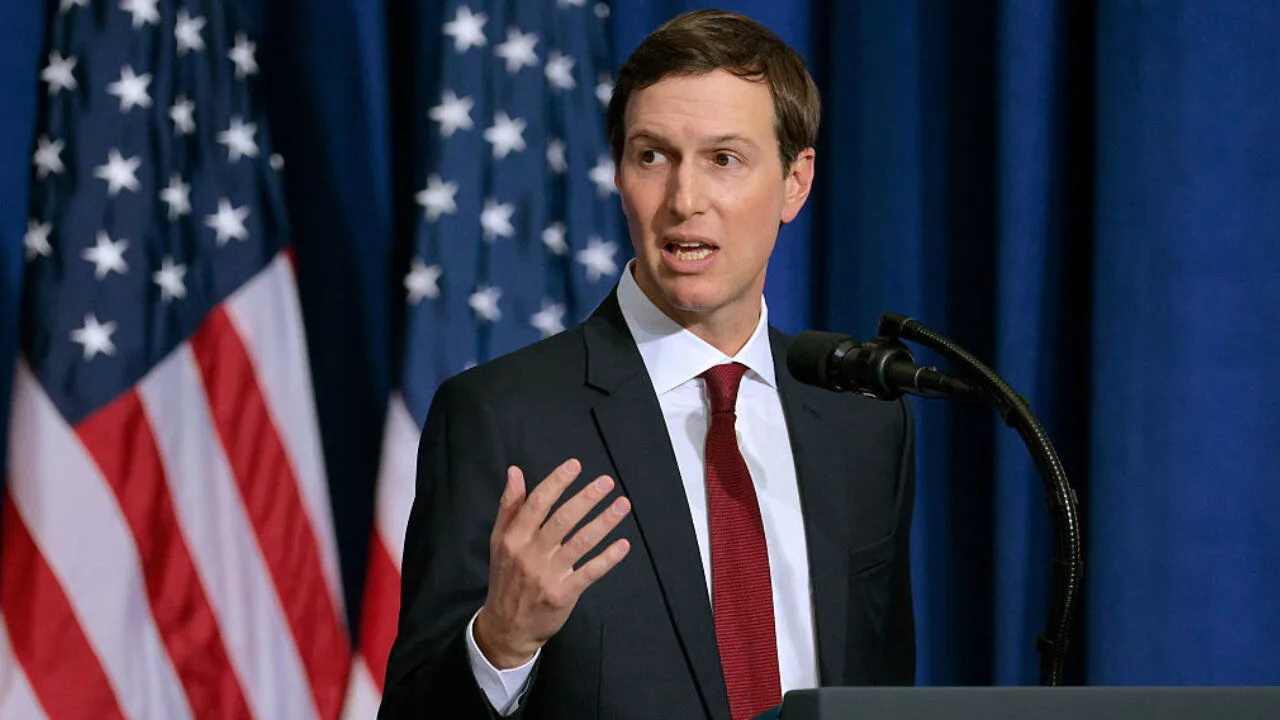
The most likely scenario for ending the Russia-Ukraine war is not a decisive victory but a fragile, frozen conflict. As 2026 unfolds, negotiations to conclude the war have intensified amid US President Donald Trump’s push to accelerate the process, yet they remain constrained by deep divergences over the terms of peace. Trump’s special envoy Jared Kushner has stated that the only missing element for an agreement is Ukraine’s consent to cede territories within the boundaries demanded by Vladimir Putin, adding that Washington has already prepared most of the peace agreement but its signing is being held up by Kyiv’s unwillingness to make territorial concessions.
From Kyiv’s perspective, Russia’s conditions are unacceptable. They call for Ukrainian forces to withdraw entirely from four regions—Donetsk, Luhansk, Kherson, and Zaporizhzhia—and demand formal recognition of Crimea and other occupied territories as Russian, along with a significant reduction of Ukraine’s armed forces. Taken together, these demands would substantially narrow the scope of Ukrainian statehood and are seen by Kyiv not as a basis for compromise but as a framework for capitulation.
The most probable outcome is a Trump-brokered freeze before the November 2026 midterms, with Washington pressuring both sides—threatening Russia with unlimited arms to Ukraine and Ukraine with a cut-off of support—to freeze the conflict without a formal treaty. A “Korean-style” scenario, involving an indefinite armistice and a frozen front line on current positions, is also increasingly likely. Russia’s strategic logic, however, depends on compliance with its predetermined demands rather than mutual concessions, and Moscow has rejected proposals to freeze the conflict along the current line of contact. What emerges, therefore, is not a lasting peace but a protracted, unstable stalemate—a slow-burning, high-casualty conflict with a territorial stalemate that continues to destabilize the broader European security architecture.
Iran Hollows American Power and Military Dominance
If Ukraine exposed the limits of proxy warfare, the US-Iran war has delivered a more direct blow to the foundational pillar of American hegemony: military dominance. The conflict, which began on 28 February 2026, has demonstrated the United States’ declining ability to project military power on a global scale. Viktoria Panova, Head of the BRICS-Russia Expert Council, noted that by failing to achieve the victory it had proclaimed, the United States demonstrated that it is unable to effectively project military power worldwide or protect its allies, despite a number of existing agreements.
The most striking revelation of the Iran war is that American military superiority no longer guarantees decisive outcomes. Early claims that US air strikes had significantly degraded Iran’s drone and missile capabilities now appear overstated. Iran has leveraged geography and asymmetric tactics to blunt American power and inflict a strategic setback, illustrating that control of the skies does not guarantee control of outcomes. The war has suggested that American “military primacy” may no longer even be a viable strategy. The US hasn’t even won the military phase of the conflict despite facing a far weaker conventional force.
The material costs have been staggering. The US expended over 850 Tomahawk missiles, and replacing them would take approximately ten years at current production rates. Over 150 THAAD interceptors were fired in the first ten days of the conflict, representing roughly 30 per cent of total US inventory. This depletion of critical munitions has left the Pentagon’s global defense architecture structurally compromised, with consequences that extend far beyond the Middle East to the Indo-Pacific theater.
The political consequences of this military stalemate are already reshaping the global order. The recently concluded Mecca Joint Defense Agreement between Pakistan, Turkey, and Saudi Arabia is a clear indication that Washington is “seriously losing its capacity to maintain global dominance”. As Panova observed, an alliance with the United States can act as a source of insecurity rather than security—the United Arab Emirates, for example, would not have come under attack had US military bases not been located there. Countries are increasingly compelled to provide for their own security and conclude separate defense agreements, signaling the fragmentation of the American-led security architecture.
Europe’s Strategic Awakening from Dependency to Autonomy
For the European Union, the Iran war has functioned as a structural inflection point. Operation Epic Fury, launched without a single European ally being consulted, did not create Europe’s strategic autonomy problem—it made the absence of a solution structurally untenable. Three simultaneous shocks have compressed the timeline for European action: the 2026 National Defense Strategy encoded the end of automatic American commitment to European security; the drone war demonstrated in real time that a $35,000 Shahed drone against a $4.1 million Patriot interceptor represents a cost-exchange ratio of 80:1 to 240:1 in the attacker’s favor; and the blockade of the Strait of Hormuz translated geopolitical abstraction into an energy price shock with immediate industrial consequences.
The war has also complicated European rearmament and support for Ukraine while further eroding confidence in the United States as a reliable guarantor of Europe’s defense. Europeans’ unwillingness to participate in the US and Israeli military campaign has increased the Trump administration’s resentment toward NATO, raising the possibility of a faster withdrawal of US personnel from key NATO posts or a reassessment of the US force posture in Europe. The US has expended a significant share of its arsenal during the conflict and will likely prioritize replenishing its own stockpiles over the needs of European allies and Ukraine. In March 2026, Switzerland learned that its order of five Patriot systems would face a five-year delay, and the Pentagon has discussed redirecting assets earmarked for Ukraine to the Middle East.
In response, the EU has accelerated its most ambitious defense initiative in decades. The ReArm Europe plan, rebranded as Readiness 2030, aims to mobilize up to €800 billion in defense investment by 2030, with EU member states committing to increase defense spending to 5 per cent of GDP within a decade. The plan’s structural shifts are profound: layered low-cost counter-drone architecture has moved from aspiration to top priority, stockpile depth has displaced system sophistication as the primary readiness metric, and the defense industrial base is being treated for the first time as a strategic deterrent asset in its own right. As one analysis noted, the companies that understood this before the war began already have the backlogs to prove it.
Toward a Multipolar Future
The cumulative effect of these developments is a world order that no longer resembles the unipolar moment of the 1990s. Scholars describe the emerging landscape as “unbalanced multipolarity”—lacking the clarity of bipolarity but potentially more antifragile. The dollar’s role as the default global currency, the dominance of US institutions in setting international rules, and the military backing that sustained it all are being challenged from multiple directions at once. A superpower built to run the world can no longer comfortably afford to police it.
For the United States, the strategic challenge is existential in its implications. The country faces a choice between attempting to sustain a global military presence that has proven unsustainable—both economically and politically—or retrenching to a more modest role as a regional power within a multipolar system. The war in Ukraine shattered a core assumption about great-power dominance: that size and military strength are enough to impose one’s will. The war with Iran has reinforced this lesson, showing that even overwhelming military superiority cannot guarantee political outcomes against a determined adversary employing asymmetric strategies.
For Europe, the path forward requires closing its window of vulnerability as quickly as possible. The EU’s pursuit of strategic autonomy is first and foremost a matter of reducing exposure to US political volatility, industrial bottlenecks, and the diversion of defense equipment during wartime. Yet true strategic autonomy would require an additional $289 billion annually and 300,000 more troops beyond current plans—a level of commitment that remains politically uncertain.
The transition now underway is not a clean break into a fully formed multipolar order but a messy, contested process in which old certainties are eroding faster than new structures are being built. The wars in Ukraine and the Middle East are increasingly shaping this new global order, with eventual transition away from the post-World War II unipolar world dominated by the United States and its allies. What will eventually emerge from this great flux of our times is uncertain, but what is clear is that the age of American hegemony—and the assumptions that sustained it—has passed.